
Description
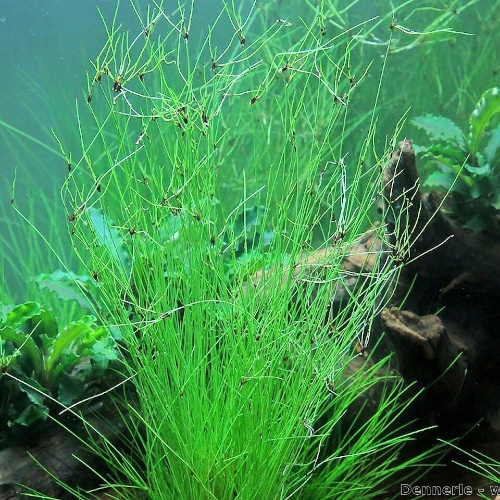
Eleocharis vivipara, also known as viviparous hairgrass, is an aquatic plant with fine, tall, grass-like blades known for its unique asexual reproduction. A hardy and adaptable plant, it thrives in amphibious conditions and is a popular background plant for planted aquariums.
Growth and appearance
Tall, grassy foliage: This species grows in dense clumps of slender, bright green, hair-like leaves that can reach 30 to 50 cm or more in height. When placed in aquariums, its fine leaves flow gracefully with the water current, creating a soft, elegant effect.
Background placement: Unlike smaller hairgrass varieties that are used for carpeting, the height and bushy growth of E. vivipara make it ideal for the midground or background of an aquarium.
Variable photosynthetic pathway: In its natural habitat, this plant can grow both fully submerged in water and emersed (partially out of water). It has the unique ability to switch between C3 photosynthesis when aquatic and the more efficient C4 photosynthesis when it grows on land.
Reproduction
Viviparous propagation: The plant’s name comes from its distinct reproductive strategy, known as vivipary. It produces tiny plantlets on the tips of its mature leaves or flower stalks. These plantlets eventually detach and float away to root elsewhere, forming new, genetically identical plants.
Runner propagation: Like other hairgrasses, it also reproduces by sending out runners (stolons) through the substrate. This allows it to form dense, lush clumps over time.
Care and cultivation
Lighting: E. vivipara prefers moderate to high lighting conditions, which promotes healthy, upright growth.
Nutrient requirements: Although it can adapt to low-tech setups, a nutrient-rich substrate is recommended, especially if CO₂ is not injected. The plant also benefits from regular liquid fertilization.
CO₂ supplementation: While not mandatory, adding CO₂ to the water will significantly enhance its growth rate and help maintain a vibrant green color.
Trimming: Occasional trimming is necessary to maintain the plant’s shape and prevent overgrowth, which can cause dead leaves and algae to accumulate.Water parameters: It tolerates a wide range of water conditions, thriving in temperatures between 20–28°C and a pH of 6.0–7.5.
Reviews
There are no reviews yet.